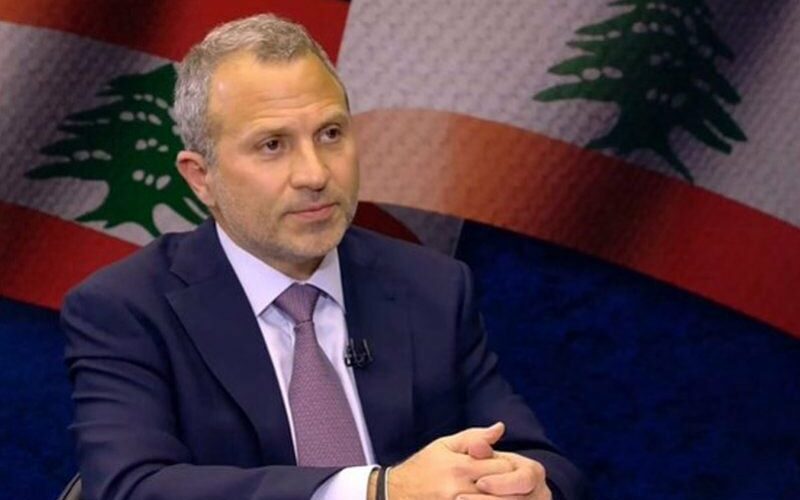
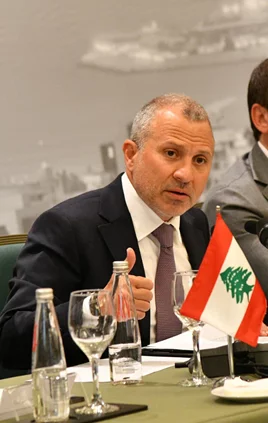
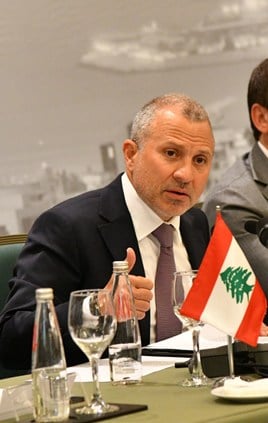
Free Patriotic Movement (FPM) leader MP Gebran Bassil addressed the electricity sector, reviewing the plans developed by FPM energy ministers and assessing the state of the sector under the current leadership of the Ministry of Energy and the Lebanese Forces. Bassil stressed that the situation the sector has reached is “unacceptable and unprecedented,” and that reaching zero hours of electricity supply, while bills continue to rise, should prompt Lebanese citizens to understand how the sector reached this point.
The Lebanese Forces’ Failure
In a recorded video, Bassil addressed what he described as “the Lebanese Forces’ electricity plan,” recalling that the party had promised Lebanese citizens 24-hour electricity within six months of taking over the ministry, whereas, after a year and a half, electricity supply had fallen to zero hours.
He argued that the attempt to cover up this failure consisted of presenting the establishment of the Electricity Regulatory Authority as an achievement, before its president and one of its members resigned several months later without the authority having accomplished anything.
Bassil accused the authority of preparing, within two weeks, an electricity policy paper using artificial intelligence. He said it contained nothing but "rhetoric, empty prose and general statements," without any project, date, figure, timetable, power plant, grid, substation or implementation program.
He added: "If you don’t believe me, run the plan through AI and it will tell you that 76 percent of it was produced by AI."
Bassil stressed that the only clear element in the paper was the legalization of private generators under the label of “microgrids,” noting that this project had previously been officially presented to his team when it was in charge of the ministry.
He argued that the project would divide Lebanon into small electricity zones that would become “electricity zones of influence and generator gangs, but in a legalized form, allowing profits to be legally shared among the establishment.”
Bassil said this reveals, in his view, why his team was not allowed to complete its plan: to preserve "electricity-sector patronage and the fuel mafia" and allow them to continue benefiting.
Bassil compared the 2010 plan with what the Ministry of Energy is currently proposing, saying that the plan developed by his team aimed to generate profits for the state treasury and included implementation programs, specific deadlines and clearly defined production targets based on gas, solar and wind energy.
He said the 2026 plan, by contrast, is based on “microgrids designed to distribute profits among the militia establishment controlling the state’s and people’s money.”
Bassil then moved on to what he described as “the Lebanese Forces’ failure and corruption in managing the electricity sector,” arguing that the Minister of Energy “does not know how to develop an electricity plan” and therefore transferred powers granted to him under the Electricity Law to the regulatory authority, which, according to Bassil, relied on artificial intelligence to prepare its plan.
Bassil said the minister had failed to secure diesel supplies for the market and allowed shortages to occur, while leaving his office director to manage fuel deals. He referred to what he called “fuel tanker scandals,” claiming that each shipment was being sold at an additional cost of between $6 million and $7 million.
He also accused those managing the file of “misrepresenting the origin of the fuel,” claiming that it comes from Turkey when, according to him, it actually originates in Russia, and of obtaining government authorization to bring it into Lebanon without conducting the required local inspections.
Bassil also addressed the water sector, accusing the Energy Minister of failing to spend funds available in the ministry’s budget to complete stalled dams, which he said forces citizens to spend hundreds of millions of dollars to purchase water.
He questioned why the dams were not being completed, arguing that the minister "is not allowed by his party to complete them because that would mean giving Gebran credit," and noting that increased electricity outages also exacerbate the water crisis.
Bassil stressed that these facts, in his view, allow the FPM to accuse the minister and his party of "deliberately causing" citizens to bear an additional cost of $2.25 billion annually and depriving the state treasury of $360 million annually as a result of failing to use the power plants and resources currently available.
He added that the ministry is capable of providing citizens with electricity through Électricité du Liban (EDL), but does not do so, forcing them to purchase electricity from private generators at a higher cost.
He described this policy as "the policy of the fuel and generator mafia and the policy of the establishment that obstructed our plan to provide electricity 24/7."
Bassil revealed that this situation is prompting his team to consider filing a complaint before the judiciary, not only over alleged waste of public funds, but also over what he described as “directly and deliberately causing massive losses to citizens and the state treasury,” if the minister does not immediately act to stop the damage.
The 2010 Plan
Bassil revisited the electricity plan developed in 2010, explaining that six months after he took over the Ministry of Energy, a plan was drawn up in June of that year based on providing electricity 24 hours a day, with zero deficit and without state subsidies, while generating profits for the treasury, similar to the telecommunications sector.
He explained that achieving this required two things: increasing tariffs in parallel with increasing production, and reducing production costs by relying on natural gas. He said the implementation of both measures was subsequently blocked within the government, adding that "the Lebanese Forces were at the forefront of those who obstructed it."
He pointed out that increasing production required the construction of power plants, some on a faster track with state financing and others on a longer-term basis through partnerships with the private sector.
According to Bassil, the state-funded emergency plan aimed to provide electricity 24/7 by purchasing electricity generated by power barges, stressing that it involved "buying electricity from the barges, not renting the barges as they falsely claim."
The plan also included the construction of new power plants in Zouk and Jiyeh, which entered service in 2017 and provided approximately four hours of electricity supply, as well as a large plant in Deir Ammar that could have provided an additional five to six hours, but whose financing, he said, was halted by the Ministry of Finance.
Bassil added that the plan was accompanied by the construction of transmission networks and substations, as well as tenders related to electricity distribution and gas infrastructure.
He stressed that his team had completed the studies, maps and tenders, secured financing and awarded contracts to international companies "at very good prices," according to a timetable that was supposed to provide electricity 24/7 by 2014. However, he said implementation was halted because funding was blocked "for political reasons and out of political spite."
Bassil noted that during the period when his team was in charge of the ministry, electricity supply ranged from a minimum of 16 hours to a maximum of 21 hours per day, depending on the season, with an annual average exceeding 18 hours a day. Today, he said, supply ranges between zero and a maximum of four or five hours.
He pointed out that the current officials took over the sector after the tariff had been raised from 9 cents to 27 cents per kilowatt-hour, a level he said allows collection revenues to cover any deficit and finance fuel purchases for power plants without state subsidies.
Bassil also addressed the issue of electricity subsidies, explaining that governments had approved these subsidies in the mid-1990s and that the FPM opposed them when it took over the ministry and voted against them, while others insisted on maintaining them and voted in their favor.
He said those same parties later “falsely called them waste and theft and gave false figures of $40 billion and $50 billion,” whereas, according to him, the actual value of state subsidies between 2000 and 2021 amounted to $22.7 billion as a result of the subsidy policy those parties had adopted.
Bassil said that even after the power barges and some power plants were taken out of service, current generation capacity still allows, according to his estimates, for at least 12 hours of electricity per day, while citizens currently receive two hours, four hours or, at times, no electricity at all.
He argued that what is being presented as an "achievement" because the sector is no longer creating a deficit for the treasury is "another lie," because, according to him, this policy is imposing billions of dollars in additional costs on citizens, the economy and the state.
Bassil explained his calculation by saying that the highest electricity cost borne by citizens today is private-generator electricity, at approximately 55 cents per kilowatt-hour, while EDL electricity costs citizens 27 cents per kilowatt-hour.
This means, he said, that every hour of electricity not provided by the state must be purchased by citizens at nearly twice the cost, representing a difference of 28 cents per kilowatt-hour. According to his calculations, each hour of lost state electricity supply translates into approximately $187 million in additional annual costs.
He added that providing eight fewer hours of electricity than the ministry is capable of supplying costs citizens approximately $1.5 billion annually in additional generator bills.
Bassil said that if four additional hours that could have been provided through power barges are added to the calculation, the additional cost rises by approximately $750 million, bringing the total to $2.25 billion annually.
He continued that when the current situation is compared with the period during which average electricity supply stood at 18 hours per day a difference of up to 16 hours the additional direct cost to citizens amounts, according to his calculations, to approximately $3 billion annually.
Bassil described this increase as “the achievement the Lebanese Forces boast about," pointing out that its effects can be seen every month in household electricity bills, which, he said, have risen from $50 to as much as $1,000, without taking into account businesses and institutions that face thousands of dollars in additional monthly costs.
Bassil also discussed the cost to the state, explaining that EDL charges consumers a tariff of 27 cents per kilowatt-hour, while the cost of fuel, according to him, ranges from more than 20 cents to 30 cents. He argued that EDL can therefore cover its costs if collection is properly carried out.
By contrast, he said that the cost of purchasing electricity from power barges is no more than 15 cents per kilowatt-hour and could fall to 11 or 12 cents under normal fuel-price conditions, allowing EDL to generate a margin of at least 12 cents per kilowatt-hour.
Bassil said that securing four hours of electricity from power barges would have generated approximately $360 million annually in additional revenues for EDL, instead of pursuing what he described as "fantastically expensive electricity through an undersea cable from Cyprus or Turkey."
He added that the current minister "would like to bring back the barges today but does not dare to, because that would vindicate Gebran," arguing that halting the barges deprived the state of $360 million annually for every four hours of electricity supply.
Bassil also addressed the decision to conduct a forensic audit into the power-barge file, noting that the Lebanese judiciary had already conducted investigations into the matter.
He argued that the purpose of the audit was to "keep the lie going for years to come and distract people instead of getting the work done," questioning whether it would not have been more appropriate to continue the forensic audit of Banque du Liban and reveal "who stole the Lebanese people’s deposits."
Bassil concluded by calling on Lebanese citizens to understand the situation through three figures: 55 cents for electricity from private generators, 27 cents for EDL electricity and 15 cents for electricity purchased from power barges, urging them to judge for themselves "where the waste is and where the damage lies."
He concluded: "This is the truth. Remember the numbers, and remember their lies."















 EXCLUSIVE
 EXCLUSIVE
 EXCLUSIVE